


What's On This Page
How Architectural Lighting Systems Work
Architectural lighting systems work by combining concealed mounting, LED lighting technology, smart controls, and engineered power distribution so the home receives consistent, customizable light without a cluttered appearance.
Structural Mounting System
The structural mounting system is a concealed track or mounting method integrated into the roofline or soffit to hold lighting components in consistent alignment. It matters because concealment and spacing are just as important as brightness in a premium installation.
LED Lighting Technology
LED lighting technology provides long-life, energy-efficient illumination that supports both warm everyday lighting and full seasonal color scenes. High-quality LEDs improve visual consistency, reduce maintenance pressure, and support long-term use.
Smart Control System
Smart control systems allow homeowners to manage brightness, color, schedules, and pre-set scenes from an app or controller. This gives the system everyday usefulness instead of limiting it to one season.
Engineered Power Distribution
Engineered power distribution keeps brightness even across the system and helps reduce performance issues caused by poor planning. Proper zoning and load management are especially important on larger homes with complex rooflines.
Why Homeowners Choose Architectural Lighting
Homeowners choose architectural lighting when they want their home to look designed at night, not simply decorated.
In neighborhoods like Naperville, Glen Ellyn, Hinsdale, Oak Brook, and Western Springs, the goal is usually not “more lights.” The goal is better proportion, cleaner lines, more control, and an exterior lighting system that respects the architecture of the home.
Many homeowners begin by comparing entry-level or consumer-facing systems and then move toward a design-led installation after reviewing the differences. A common comparison path is Govee permanent lighting versus a professionally designed architectural system.
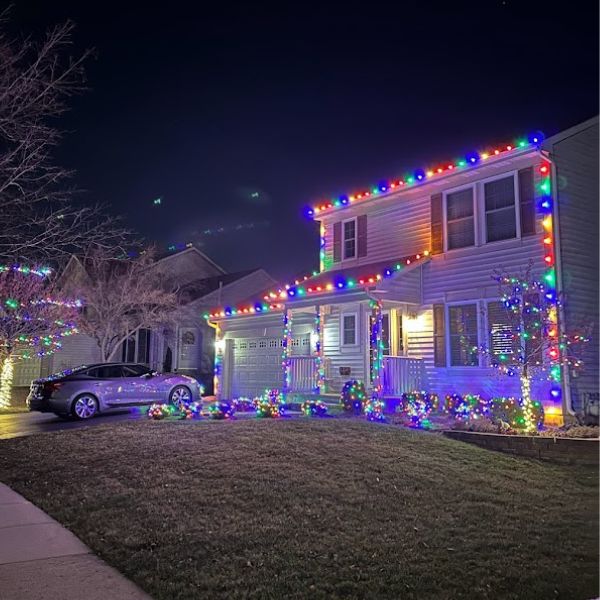
Our Design Philosophy
Architectural lighting design enhances the structure of the home through symmetry, spacing, visual balance, and layered illumination rather than simply adding rows of lights.
- Layered lighting that creates depth instead of flat brightness
- Symmetry that follows the architecture of the home instead of forcing generic spacing
- Invisible-by-day planning so the system does not dominate the roofline in daylight
- Balanced nighttime presentation with intentional emphasis at peaks, transitions, and focal points
- Scene-based customization that supports everyday lighting and seasonal flexibility
This design-first approach separates Holiday Prestige from basic installers and supports the same broader system philosophy outlined on the main permanent lighting page.
Trusted by Homeowners Across the Chicago Suburbs
Homeowners across the Chicago suburbs consistently describe Holiday Prestige as professional, responsive, detailed, and reliable from consultation through post-install support.
“Very professional and pleased with light placement.” “Great communication and attention to detail to ensure it was a perfect install.” “We have used this company for years and will never use anyone else.” “Responsive, professional, and communicate every step of the way.” “If I ever have a problem, they fix the problem right away.” |
Those reviews matter on this page because architectural permanent lighting is a trust-heavy purchase. Homeowners are not just buying product hardware; they are choosing who will plan the layout, manage the installation, communicate during the project, and stand behind the work over time.
Architectural Lighting for Chicago Homes
Architectural lighting for Chicago-area homes must be planned around real suburban housing patterns, including multi-level elevations, dormers, visible gables, extended rooflines, and premium façade details.
Homes in Naperville, Wheaton, Glen Ellyn, Hinsdale, Oak Brook, Geneva, and St. Charles often benefit from clean linear integration, tighter spacing control at transitions, and better scene planning so the finished result looks refined from the street.
Because some homeowners first enter the topic through brand-specific research, it is useful to connect this page back to product comparison content such as Govee permanent lighting while keeping the focus here on layout, design, and installation quality.
Design & Installation Process
Holiday Prestige follows a structured design and installation process so architectural lighting is mapped, installed, and configured with consistency across the home.
Step 1: Consultation and Home Evaluation
Every project begins with an on-site evaluation of the roofline, elevation changes, architectural focal points, access conditions, and power strategy. This prevents rushed pricing and supports better layout decisions from the beginning.
Step 2: Design Mapping and Layout Planning
Design mapping defines spacing, transitions, zones, and the parts of the home that should be emphasized or kept subtle. This stage is where professional design makes the largest visual difference.
Step 3: Precision Installation
Installation includes mounting, alignment, routing, concealment, and system integration with the home. The goal is a stable, discreet finished result rather than a visible retrofit look.
Step 4: Configuration and Scene Setup
Configuration includes controller setup, app connection, zone organization, and initial scenes for everyday use, holidays, and events. A well-configured system is easier for the homeowner to use consistently.
Step 5: Client Walkthrough and Support
The final walkthrough covers system use, scene changes, basic care, and support expectations. Homeowners who want stronger long-term support can review the company’s maintenance structure through the annual maintenance plan.
Technical / Structural Considerations
Architectural permanent lighting requires structural planning for roofline complexity, mounting method, electrical load management, concealment, and weather resistance.
- Multi-level elevations and long rooflines require tighter layout control to avoid visual inconsistency
- Corners, returns, peaks, and valleys need cleaner transitions than typical seasonal lighting
- Mounting strategy must consider both long-term hold strength and daytime appearance
- Electrical distribution should support even brightness and efficient future service access
- Poor planning can produce visible track, uneven spacing, bright hot spots, and premature service issues
Climate Performance in Illinois
Architectural lighting in Illinois must be installed for snow, ice, freeze-thaw cycles, wind, rain, and wide seasonal temperature swings.
That matters in the Chicago suburbs because a system that looks good on install day but is not mounted and routed correctly can show stress later. Professional installation methods improve long-term stability, appearance retention, and serviceability.
Pricing & Investment
Architectural permanent lighting is custom-priced based on home size, roofline complexity, design scope, installation access, and the specific system configuration being installed.
- Linear footage and number of architectural transitions
- Home height, access conditions, and roofline complexity
- System type, control setup, and scene requirements
- Mounting method and concealment demands
- Overall design intensity versus a simpler basic layout
This page should not publish generic “price per foot” positioning because the design component materially affects the scope of work. Accurate pricing comes from a consultation and custom proposal.
What Makes Architectural Lighting a Premium Investment
Architectural lighting carries a premium investment level because it delivers permanent installation, stronger curb appeal, year-round usability, cleaner presentation, and a more refined result than temporary or generic systems.
- It eliminates repeated seasonal installation and removal labor
- It supports both daily exterior ambiance and holiday/event flexibility
- It improves nighttime presentation for the home year-round
- It creates a more intentional, luxury-forward visual effect
- It performs as a design upgrade rather than a single-season purchase
Architectural Lighting vs Alternatives
Architectural Lighting vs Consumer-Grade Permanent Lighting
Architectural lighting is generally the better choice for homeowners who want cleaner integration, stronger layout discipline, and a more refined finished appearance. Consumer-grade systems may offer convenience, but they often do not deliver the same level of concealment, spacing control, or design cohesion.
Architectural Lighting vs DIY Lighting Systems
DIY lighting systems can work for simple applications, but they typically do not match the structural integration, warranty support, and long-term finished appearance of a professionally installed system. Homes with stronger architecture tend to benefit most from professional planning.
Architectural Lighting vs Seasonal Roofline Lighting
Architectural lighting stays installed year-round and gives the homeowner multi-season flexibility without repeated ladder work, annual scheduling, or recurring installation logistics. That makes it a stronger ownership solution for homeowners who want both convenience and design consistency.
Return on Investment for Chicago-Area Homeowners
Architectural lighting improves curb appeal, reduces recurring seasonal costs, enhances nighttime presentation, and adds year-round lifestyle value for homeowners across the Chicago suburbs.
Is Architectural Lighting Worth It in the Chicago Suburbs?
Yes — architectural lighting is worth the investment for homeowners who want a permanent exterior upgrade, stronger curb appeal, and a better ownership experience than repeated seasonal installations. The value becomes especially clear when the system is used beyond a single holiday season for everyday ambiance, events, and flexible scene control.
How Long Does Architectural Lighting Last?
Architectural permanent lighting systems are typically designed to last 10–15+ years when professionally installed, properly configured, and reasonably maintained.
Actual lifespan depends on the quality of the product, the quality of the installation, the frequency of use, and local environmental conditions. Illinois weather makes proper mounting and long-term service planning especially important.
Warranty Overview
Manufacturer Coverage
Manufacturer warranties generally apply to eligible hardware components under normal residential use, subject to each product’s terms and exclusions.
Holiday Prestige Installation Workmanship
Holiday Prestige’s workmanship protection should be clearly tied to installation quality, mounting integrity, and correction of verified installation-related issues. For website structure, this page should connect directly to the warranty page and the annual maintenance plan so homeowners understand both base coverage and ongoing support options.
Service Area
Holiday Prestige provides architectural permanent lighting design and installation throughout the Chicago suburbs within approximately 50 miles of West Chicago, Illinois.
Counties Served
DuPage County, Kane County, Cook County, Will County, and Lake County.
Core Suburb Groups
Western Suburbs: Naperville, Wheaton, Glen Ellyn, Downers Grove, Elmhurst, Oak Brook, West Chicago, Geneva, St. Charles, Batavia.
Near-West / Southwest: Hinsdale, Western Springs, Clarendon Hills, Burr Ridge, La Grange, Lemont, Orland Park.
North / Northwest Reach: Northfield, Arlington Heights, Barrington, Lake Forest, Deerfield, Northbrook, Glenview.
Architectural Lighting Near Me
Homeowners searching for “architectural lighting near me” in the Chicago suburbs are usually looking for a professionally designed permanent system rather than a basic installation.
This page should satisfy that local intent by tying design quality, installation quality, warranty structure, and long-term service support together in one place for Naperville, Hinsdale, Wheaton, Oak Brook, and surrounding markets.
Common Installation Mistakes
The most common architectural lighting mistakes are poor spacing, visible track, over-bright scenes, weak transitions, improper mounting, and no real zone planning.
- Spacing that ignores the architecture and creates a generic look
- Visible hardware or track that weakens daytime curb appeal
- Overly bright output that feels harsh instead of refined
- Poor corner and peak transitions that break visual continuity
- No service strategy for future adjustments or repair access
Holiday Prestige’s process is designed to prevent these issues before installation rather than trying to correct them after the system is already in place.
Architectural Lighting FAQ
What is architectural permanent lighting design?
Architectural permanent lighting design is a professionally planned and permanently installed exterior lighting system that enhances a home’s architectural features with precise, programmable illumination year-round. It is designed around the structure of the home so the final result looks balanced, refined, and intentional instead of generic. It is commonly used to highlight rooflines, peaks, entry points, and major architectural lines. For Chicago-area homeowners, it also creates flexibility for everyday lighting, holidays, and events without repeated seasonal installation.
How long does architectural lighting last?
Architectural permanent lighting systems are designed to last 10 to 15+ years when professionally installed and properly maintained. Actual lifespan depends on usage, product quality, installation method, and weather exposure. In Illinois, mounting quality and long-term service planning matter because snow, wind, and freeze-thaw conditions can affect durability over time. A stronger installation and support strategy usually produces a better ownership experience.
How much does architectural lighting cost in the Chicago suburbs?
Architectural permanent lighting in the Chicago suburbs is custom-priced based on the home’s size, roofline complexity, system type, access conditions, and overall design requirements. This is not a one-price-fits-all service because each home requires its own layout, electrical planning, and installation strategy. Larger homes and more detailed rooflines typically increase the level of design and installation work. The most accurate pricing comes from a consultation and custom proposal.
Is architectural lighting worth the investment?
Yes — architectural permanent lighting is worth the investment for homeowners who want a permanent, high-end exterior upgrade that improves curb appeal, adds year-round usability, and eliminates repeated seasonal installation costs. It is especially valuable for homeowners who care about both daytime appearance and nighttime presentation. Instead of paying for temporary lighting year after year, many homeowners choose a professionally integrated system that remains in place and is usable beyond a single season. In premium neighborhoods, it also supports a stronger overall presentation for the property.
Can architectural permanent lighting stay installed year-round?
Yes — architectural permanent lighting is specifically designed to remain installed year-round as a permanent part of the home’s exterior. That permanent installation is one of its biggest advantages over temporary lighting systems that must be installed and removed every season. When properly designed, the system stays discreet during the day and becomes highly functional at night. Homeowners can use it for everyday warm lighting, holidays, celebrations, sports themes, and seasonal scenes without reinstallation.
Does architectural permanent lighting work well in Illinois weather?
Yes — architectural permanent lighting can perform very well in Illinois weather when it is professionally installed using weather-appropriate mounting, concealment, and electrical planning methods. Chicago-area homes experience snow loads, ice, wind, rain, and major temperature swings, so installation quality matters just as much as product quality. A poorly installed system may show visibility issues, mounting stress, or uneven performance over time. A properly engineered system is built to handle those regional conditions more reliably.
Can architectural lighting be customized for holidays and everyday use?
Yes — architectural permanent lighting can be customized for holidays, everyday accent lighting, parties, events, and seasonal themes through programmable controls, scenes, timers, and brightness settings. This flexibility is one of the main reasons homeowners choose permanent lighting instead of single-purpose systems. Many homeowners use softer lighting for daily curb appeal and then shift to color scenes for Christmas, Halloween, patriotic holidays, or family events. The best systems allow that versatility without sacrificing the home’s architectural look.
Is architectural permanent lighting visible during the day?
No — properly designed architectural permanent lighting should be minimally visible during the day because it is installed to blend into the home’s roofline, soffit, or other structural transitions. Daytime concealment is one of the most important differences between a premium design and a low-end installation. If the track, wiring, or layout is obvious in daylight, the system was usually not designed or installed at a high level. The goal is for the home to look clean and elegant by day, then dramatically enhanced at night.
How long does architectural permanent lighting installation take?
Most residential architectural permanent lighting installations are completed within one to three days, depending on the home’s size, accessibility, roofline complexity, and system scope. Smaller homes may be completed faster, while larger custom homes with multiple elevations and more detailed layout requirements can take longer. Timeline also depends on how much design mapping, zoning, and configuration is required. A consultation is the best way to determine the likely schedule for a specific home.
Does architectural permanent lighting increase home value?
Yes — architectural permanent lighting can increase perceived home value by improving curb appeal, nighttime presentation, and the overall impression of the property. While value impact varies by buyer and market, premium exterior upgrades generally help a home feel more polished and architecturally complete. This can be especially meaningful in upper-end suburban neighborhoods where presentation matters. Many homeowners also value it as a lifestyle upgrade even apart from resale.
Can architectural permanent lighting be removed if necessary?
Yes — architectural permanent lighting can be professionally removed if necessary, although it is designed as a long-term installation rather than a temporary product. Removal should be handled carefully to protect the home’s exterior materials and avoid unnecessary damage. The exact process depends on the mounting method, home surface, and product system used. A professionally installed system is usually easier to evaluate, service, and remove properly than a poorly installed one.
Is architectural permanent lighting energy efficient?
Yes — architectural permanent lighting is energy efficient because it uses LED technology, low power draw, and programmable controls that help manage run times and brightness levels. Compared with older lighting technologies, LEDs provide strong output with much lower energy consumption. Scheduling and scene controls also allow homeowners to use the system more efficiently rather than running full brightness all the time. That makes it practical for both everyday accent use and seasonal displays.
Can I use architectural permanent lighting for Christmas and holiday displays?
Yes — architectural permanent lighting can be used for Christmas, holiday displays, and seasonal celebrations while still functioning as an elegant year-round architectural lighting system. That dual-purpose use is one of the strongest advantages of permanent lighting for residential homes. Homeowners can switch from warm everyday lighting to festive holiday colors and themed scenes through app controls and presets. This eliminates the need for annual roofline light installation while still allowing a highly customized holiday presentation.
What happens if one section of the lighting system fails?
If one section of an architectural permanent lighting system fails, that section can often be diagnosed, serviced, or replaced without removing the entire installation, depending on the product design and system layout. Proper zoning and segmentation are important because they help isolate issues more efficiently. This is another reason professional planning matters during the original installation. A well-designed system is easier to service and usually avoids turning one localized problem into a whole-system issue.
Do you provide service or maintenance for architectural permanent lighting?
Yes — Holiday Prestige provides service and maintenance support for architectural permanent lighting throughout the Chicago suburbs. Maintenance support helps address performance issues, preserve system appearance, and protect long-term functionality. This may include inspections, adjustments, diagnostics, or repair-related service depending on the system and the coverage in place. Homeowners who want stronger long-term support should review the annual maintenance plan.
Do you install architectural permanent lighting throughout the Chicago suburbs?
Yes — Holiday Prestige installs architectural permanent lighting throughout the Chicago suburbs within approximately 50 miles of West Chicago, Illinois. The service area includes DuPage, Kane, Cook, Will, and Lake counties, along with many surrounding suburban communities. Homeowners in Naperville, Wheaton, Glen Ellyn, Hinsdale, Oak Brook, St. Charles, Geneva, and nearby markets are within the core service region. Local service availability is confirmed during the consultation process.
Is architectural permanent lighting HOA-friendly?
Architectural permanent lighting is often HOA-friendly because high-quality systems are designed to be discreet, permanently integrated, and minimally visible during the day. That said, HOA requirements vary by community, subdivision, and property type. Some associations have specific rules about exterior modifications, visibility, lighting color, or seasonal display use. Homeowners should review their HOA guidelines before installation so the system can be planned accordingly.
What type of homes benefit most from architectural permanent lighting?
Architectural permanent lighting delivers the best results on homes with defined rooflines, strong exterior contours, visible peaks, gables, entry features, and other architectural details worth highlighting. Homes with clean lines and dimensional structure tend to show the most dramatic visual improvement at night. Larger custom homes and upper-end suburban properties also benefit because lighting helps emphasize scale, symmetry, and design detail. The right layout can still improve a wide range of home styles when properly planned.
Why choose Holiday Prestige for architectural permanent lighting design?
Homeowners choose Holiday Prestige for architectural permanent lighting design because the company focuses on precision layout, premium presentation, professional installation quality, and a design-first approach tailored to the architecture of the home. This is not just roofline light placement. It is the design of how the home should look at night and how the system should disappear during the day. That difference matters in both aesthetics and long-term performance. For homeowners seeking a stronger finished result in the Chicago suburbs, that design discipline is a major advantage.
Is architectural permanent lighting better than basic consumer-grade permanent lighting systems?
Yes — architectural permanent lighting is generally better than basic consumer-grade permanent lighting systems for homeowners who want cleaner integration, more refined design, stronger structural installation, and a more premium finished appearance. Consumer-grade systems may work for simpler use cases, but they often prioritize convenience over concealment, architectural balance, and long-term presentation quality. A professionally designed system is built around the home itself rather than just the product. That usually produces a more elegant result and a stronger overall ownership experience.