


What's On This Page
What Is Basic Permanent Lighting?
Basic permanent lighting is a professionally installed system with a fixed or limited control interface that provides consistent, single-color or limited-preset illumination without full RGB customization or mobile app control. Basic systems use the same aluminum track mounting, the same professional-grade weatherproof wiring, and the same structural installation standards as smart systems. The difference is in the controller and LED module specification, not in installation quality or structural durability.
Basic systems are typically used in three scenarios: commercial or architectural applications where consistent white or warm-white illumination is the goal, installations where the homeowner has a defined single-purpose use case such as permanent white roofline lighting for a specific aesthetic, and cost-sensitive projects where the priority is a durable concealed system at the lowest possible investment with the understanding that control capabilities will be limited.
In the Chicagoland residential market, basic permanent lighting represents a small minority of HP’s installations. Most homeowners who initially request a basic system upgrade their inquiry to smart during the consultation once they understand what the additional investment delivers and once the upgrade-path economics are explained clearly.
Important context: both options in this guide are professionally installed, professionally warranted, and structurally equivalent in mounting, wiring, and LED quality. This is a control-tier comparison within the professional permanent lighting category, not a quality comparison between professional and consumer systems.
How Each System Works: Control Capabilities Compared
The structural installation of smart and basic systems is identical. The difference is entirely in the control layer: the controller hardware, the LED module specification, and the software platform that manages the system after installation.
| Capability | Smart app-controlled | Basic permanent | Advantage |
|---|---|---|---|
| Color range | Full RGB: millions of colors available | Single color or limited preset palette | Smart |
| Color changing | Dynamic color changes, gradients, animations | Static output, no dynamic changes | Smart |
| App control | Full mobile app with remote access anywhere | Switch, timer, or limited controller | Smart |
| Scheduling | Daily schedules, sunrise/sunset automation | Timer-based on/off only | Smart |
| Zone programming | Independent control of multiple roofline zones | Single zone, no independent section control | Smart |
| Scene presets | Unlimited saved scenes for any occasion | No preset capability | Smart |
| Holiday programming | Dedicated profiles for every holiday, single-tap activation | Manual change required if color is supported | Smart |
| Smart home integration | Alexa, Google Home, Apple HomeKit compatible | No smart home integration | Smart |
| Remote access | Control from any location via internet | On-site control only | Smart |
| Brightness control | Dimming by zone and schedule | Fixed brightness output | Smart |
| Structural durability | Professional-grade, Midwest-rated | Professional-grade, Midwest-rated | Tie |
| Daytime appearance | Architecturally concealed, invisible | Architecturally concealed, invisible | Tie |
| LED lifespan | 50,000–100,000 hours | 50,000–100,000 hours | Tie |
| Upfront cost | Higher (smart controller and RGB LED spec) | Lower (basic controller hardware) | Basic |
Control System Architecture
Smart systems use a WiFi-connected controller that communicates with individually addressable LED modules or zone segments through a proprietary protocol. The controller connects to the home’s existing wireless network and handles scheduling, color management, and automation logic locally, with cloud sync for remote access. Schedule and color updates are pushed from the app to the controller in real time. The controller hardware in smart systems is purpose-built for permanent lighting management and is a meaningful cost component in the installation investment.
Basic systems use simpler controller hardware: a fixed-function controller, a standard timer, or a limited-preset selector. The controller manages on/off timing and, in systems with limited preset capability, may allow switching between two to four fixed color options. There is no wireless connectivity, no app, and no remote access. Schedule changes require physical access to the controller at the electrical junction near the power supply connection.
LED Module Specification
Smart systems use LED modules capable of independent color mixing across red, green, and blue channels, producing the full RGB range. Premium smart systems use individually addressable LED nodes, meaning each physical light point on the roofline can be set to a different color simultaneously. This enables animation effects, chase sequences, and gradient patterns. Basic systems use single-color LED modules or modules with fixed color combinations that cannot be mixed independently. The LED module specification is the hardware layer beneath the controller that determines whether a system can produce dynamic color output at all, regardless of what controller is attached.
Automation And Scheduling Depth
Smart systems support multi-schedule management: separate schedules for weekdays, weekends, holidays, and seasonal modes that activate automatically based on the calendar. Sunrise and sunset automation adjusts daily on and off times as day length changes across the year without any homeowner action. Scene presets allow a homeowner to create a named holiday profile once, save it, and activate it with a single tap in future years without reprogramming. Basic systems operate on a fixed daily timer with no seasonal adjustment and no preset management.
Smart Vs Basic: Key Differences And Verdicts
For most Chicagoland homeowners who install permanent lighting to use it actively year-round across multiple holidays and occasions, smart app-controlled is the clearly better choice. For homeowners with a specific single-function use case or a strict cost ceiling, basic permanent lighting is a legitimate and professionally installed option.
Control Verdict: Smart Wins For Year-Round Use
Smart lighting provides full, remote, app-based control that eliminates every manual interaction with the system after installation day. Basic lighting requires physical access to the controller for any change beyond the daily timer. For a homeowner who wants green for St. Patrick’s Day, blue and white for Hanukkah, red and green for Christmas, and pastel for Easter, the smart system makes each change a thirty-second phone interaction. The basic system makes it either impossible or a physical visit to the controller panel. The control verdict is decisive for any homeowner who plans to use the system for more than one color mode.
Functionality Verdict: Smart Wins
Smart systems do more across every functional dimension: color range, scheduling depth, zone independence, preset management, smart home integration, and remote access. Basic systems deliver reliable, professionally installed permanent illumination in a fixed format. The functionality gap is not a matter of degree. It is the difference between a system that manages itself year-round from a phone and a system that turns on and off on a timer. Whether that gap is worth the additional investment depends entirely on the homeowner’s intended use pattern.
Convenience Verdict: Smart Wins By A Wide Margin
Smart lighting is dramatically more convenient over the life of the installation. The system turns on at dusk, runs the appropriate color profile for the current date, and turns off at midnight without any homeowner action. Holiday changes take seconds in the app. Brightness, zone, and schedule modifications are all phone-based interactions. Basic lighting requires physical access to the controller for any change beyond the daily on/off cycle and provides no remote capability. For homeowners who describe convenience and automation as primary reasons for choosing permanent lighting, smart is the only appropriate choice.
Upgrade Path Verdict: Choose Smart From The Start
Upgrading from basic to smart after installation is not a simple controller swap. It typically requires replacing LED modules, because smart systems need RGB-capable individually addressable LED nodes that basic systems do not use. The practical cost of upgrading approaches the incremental cost difference between basic and smart at the original installation point. Homeowners who install basic with the intention of upgrading later typically find the upgrade economics do not work in their favor. This is covered in full detail in the Upgrade Problem section below.
Cost Verdict: Basic Wins Upfront, Smart Wins Over Time
Basic systems have a lower upfront investment because the controller hardware and LED module specification are less complex. Smart systems cost more at installation. Over the five-to-ten-year ownership window, smart systems deliver more value per dollar invested because they are used more actively, across more occasions, at a frequency that distributes the incremental investment across significantly more usage events. Basic systems are used less, deliver less, and are more likely to prompt an upgrade decision that adds cost later.
What Smart Lighting Can Actually Do: A Full Feature Breakdown
Most homeowners know that smart permanent lighting can change colors. Fewer understand the full depth of what the control platform delivers in daily use across a Chicagoland ownership cycle.
Holiday And Seasonal Programming
Smart systems support unlimited named scene presets. A homeowner creates a color profile once, saves it under a name like Christmas or Fourth of July, and activates it with a single tap in future years with no reprogramming required. HP creates and saves the homeowner’s initial holiday profiles as part of every installation walkthrough, so the system arrives pre-configured for the most common Chicagoland holiday occasions.
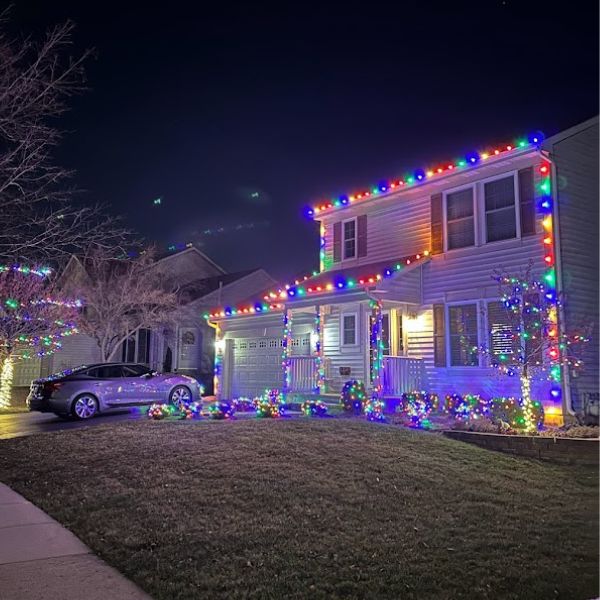
Common profiles HP configures at installation include: warm white for everyday architectural use, red and green with animated patterns for Christmas, red and white for Valentine’s Day, green for St. Patrick’s Day, pastel rotation for Easter, red, white, and blue for Fourth of July and Memorial Day, orange and purple for Halloween, and warm amber for Thanksgiving and fall season. Each profile activates instantly and can be scheduled to run automatically on specific calendar dates.
Scheduling And Automation
Smart systems support multiple independent schedule layers: separate weekday, weekend, holiday, and seasonal schedules that activate automatically based on the calendar date. Sunrise and sunset automation adjusts daily on and off times continuously across the year without homeowner input, turning on later in summer and earlier in winter. Manual override, vacation mode, and event override allow instant changes without modifying the underlying schedule.
Zone Control And Multi-Section Programming
Homes with multiple roofline sections, separate garage and main house rooflines, or distinct architectural areas program each zone independently. The front roofline can run a holiday color while the garage remains in warm white. Two separate peaks can run synchronized animations or complementary colors. Zone control is especially valuable on larger Chicagoland homes in Hinsdale, Barrington, and Lake Forest where roofline complexity makes single-zone programming visually insufficient for the scale of the installation.
Smart Home Integration
All HP-installed smart platforms support Amazon Alexa, Google Home, and Apple HomeKit, enabling voice control and integration with broader smart home automation routines. A homeowner can say ‘Alexa, turn on Christmas mode’ and the system activates the saved Christmas preset instantly. Automated routines can link permanent lighting to other smart home events such as geofence arrival triggers or occupancy-based schedules. These integrations are configured during HP’s standard installation walkthrough.
Remote Access And Travel Management
Smart systems are accessible from any location with an internet connection. A homeowner traveling for the holidays can verify the Christmas display is running as scheduled, adjust a color profile, or turn the system off if the home will be vacant for an extended period. Remote access is included with every HP-installed platform and requires no separate subscription or additional hardware.
The Upgrade Problem: Why Starting Basic Costs More Later
One of the most important practical considerations in this comparison is the true cost of upgrading a basic system to smart control after installation. Most homeowners who consider basic do so with the expectation that they can upgrade the control tier later if they decide they want more functionality. In the vast majority of cases, this expectation does not match the actual upgrade economics.
Upgrading from basic to smart is not a controller swap. It typically requires replacing the LED modules because smart systems need RGB-addressable LED nodes that basic systems do not use. The practical upgrade cost is close to the incremental cost difference between basic and smart at the original installation point. |
The reason the upgrade is expensive is architectural. Smart systems use LED modules that produce independent red, green, and blue output at each node. Basic systems use single-color LED modules with no color-mixing capability. Replacing the controller alone does nothing, because the modules cannot produce the color output the new controller is designed to deliver. The LED modules need to be replaced, which means partial or full track disassembly and reinstallation.
In HP’s consultation experience, homeowners who receive this information at the time of their original proposal almost universally choose smart from the start, because the incremental cost of specifying RGB LED modules at installation is significantly lower than the cost of a disassembly-and-reinstallation upgrade later. HP’s message in every comparison consultation is direct: if there is any scenario in which you will want color customization within the next five years, specify smart now.
Homeowners who already have a basic system and are evaluating a smart upgrade can request a conversion assessment from HP. Details are available at the HP warranty and service page for HP’s service and upgrade evaluation process.
Climate Performance: How Control Tier Affects Year-Round Use
| Season | Smart system | Basic system | Advantage |
|---|---|---|---|
| Winter Dec – Feb | Christmas, Hanukkah, New Year, Valentine scenes active on schedule | Single color or preset runs on timer | Smart |
| Spring Mar – May | St. Patrick’s Day, Easter, everyday warm white, Mother’s Day profiles | Fixed output, manual change required for holidays | Smart |
| Summer Jun – Aug | Fourth of July, Memorial Day, daily accent at sunset-adjusted times | Fixed output, timer adjusted manually for longer days | Smart |
| Fall Sep – Nov | Halloween, Thanksgiving, seasonal amber, everyday mode on schedule | Fixed output, manual change for seasonal occasions | Smart |
| Year-round | Sunrise/sunset auto-adjusts daily timing, no homeowner input required | Fixed timer requires manual seasonal adjustment | Smart |
| Travel periods | Remote access: verify and adjust from any location | No remote access, system runs fixed schedule or is off | Smart |
| Durability | Professional-grade, identical to basic across all climate factors | Professional-grade, identical to smart | Tie |
Installation Comparison
The structural installation of smart and basic permanent lighting systems is identical in process and quality. The difference appears in the controller installation, app configuration, and system walkthrough components.
Smart System Installation
HP’s smart installation follows the same five-step process as all permanent lighting installations: on-site consultation and roofline evaluation, custom circuit layout and zone design, concealed track and wiring installation, controller installation and app configuration, and client walkthrough with full operational training. The smart installation adds a controller mounting step, a WiFi network pairing process, and an extended app configuration session during which HP creates the homeowner’s initial scene presets, configures the daily schedule, sets up zone assignments, and verifies remote access. HP does not consider the installation complete until the homeowner is comfortable navigating the app independently and has confirmed the initial schedule and presets match their preferences.
Basic System Installation
Basic installation follows the same structural process through track mounting and wiring. The controller step involves mounting the basic hardware and programming the daily on/off timer. There is no app pairing, no WiFi configuration, and no preset creation. The walkthrough covers physical controller operation, timer adjustment, and manual override. Installation time is slightly shorter than smart due to the reduced configuration scope.
Post-Installation Experience
After a smart installation, the homeowner’s daily interaction with the system is entirely through the app. No physical contact with the system hardware is required at any point after installation day. After a basic installation, any change to the schedule, timing, or color preset requires physical access to the controller. For homeowners who want to manage the system from their phone, the basic system’s post-installation experience is a meaningful and recurring limitation.
Pricing And Long-Term Value
The cost difference between smart and basic permanent lighting is driven by two hardware components: the controller and the LED module specification. Understanding what drives the price difference helps homeowners evaluate whether the incremental investment is justified for their specific use case.
What Drives The Cost Difference
The smart premium over basic comes from two sources. First, the WiFi controller hardware is significantly more complex than a basic timer or fixed-function controller. A smart controller supporting app connectivity, zone management, scene presets, and smart home integration is purpose-built hardware with meaningful component cost. Second, RGB-addressable LED modules cost more per unit than single-color LED modules. For a 200-linear-foot installation with nodes every six inches, the LED module specification difference adds incremental cost across the full roofline.
HP does not publish a generic smart premium because the actual incremental cost depends on the specific brand platform, LED density, and zone count. What HP states consistently in every proposal is that the smart premium on a residential installation is a fraction of the full installation cost, and that the upgrade cost from basic to smart after installation is materially higher than the original incremental difference. HP includes the specific smart-versus-basic cost comparison in every itemized proposal.
Long-Term Value Comparison
Basic systems cost less upfront and deliver lower long-term value because they are used less actively across fewer occasions. A homeowner with a basic system uses permanent lighting for year-round illumination in a fixed color. A homeowner with a smart system uses permanent lighting across every holiday, every seasonal occasion, and every evening with different profiles as desired. The smart system’s value per dollar grows with every holiday profile activated and every scheduling automation that eliminates manual interaction. Over a five-year window, the smart system’s incremental cost is distributed across significantly more usage occasions than the basic system’s fixed output delivers.
Return On Investment And Lifespan
Both smart and basic permanent lighting systems deliver ROI through the same structural channels: elimination of seasonal contractor costs, curb appeal enhancement, property value improvement, and year-round architectural lighting. Smart systems deliver meaningfully more return on three of these four channels because of their higher utilization rate.
Usage-Based ROI
The most direct ROI differentiator is utilization. A basic system is on or off in a fixed color. A smart system runs a different profile for Christmas, Valentine’s Day, St. Patrick’s Day, Easter, Fourth of July, Halloween, Thanksgiving, and every evening in a warm white mode between holidays. HP clients with smart systems consistently report activating eight to twelve distinct seasonal profiles per year, each of which would have required a separate seasonal lighting change under any alternative approach. Each profile activation represents additional utilization value from the same installation investment.
Curb Appeal And Property Presentation
Smart systems deliver higher curb appeal return because they create distinctive, seasonal evening presentations that basic systems cannot replicate. A home that shows a precisely programmed Christmas display, a Fourth of July sequence, and a clean warm white on non-holiday evenings presents differently than a home with a fixed-color installation that looks the same in December as in July. In Chicagoland’s higher-value markets including Hinsdale, Barrington, Lake Forest, and Oak Brook, the seasonal display capability is a visible differentiator that contributes meaningfully to evening property presentation.
LED Lifespan
Both smart and basic installations by HP use LED modules rated for 50,000 to 100,000 hours of operation, equating to 10 to 15 years of typical use at standard run schedules. LED lifespan is not a meaningful differentiator between control tiers because both use professional-grade sealed modules in the same structural installation.
Warranty Comparison
Both smart and basic permanent lighting systems installed by HP carry the same structural warranties on mounting, wiring, LED modules, and installation workmanship. The warranty difference relates to the controller hardware and smart platform components.
Smart System Warranty
HP-installed smart systems carry manufacturer warranties covering LED component performance, controller hardware defects, and system electronics within the rated operating window. The WiFi controller and smart platform components are covered under the manufacturer’s electronics warranty, which varies by brand platform but typically covers hardware defects for a defined period from installation date. Because all HP-installed systems are professionally installed by authorized HP crews, the manufacturer warranty is backed by HP’s ability to facilitate claims on the homeowner’s behalf.
Basic System Warranty
HP-installed basic systems carry the same structural warranties as smart systems: manufacturer coverage on LED modules, mounting hardware, and track components. The basic controller warranty covers hardware defects in the timer or fixed-function controller unit. Because basic controllers are simpler hardware with fewer failure modes, the warranty profile is straightforward. HP provides the same workmanship warranty on basic installations as on smart installations.
HP Installation Workmanship Warranty
HP provides a workmanship warranty on every permanent lighting installation regardless of control tier, covering mounting integrity, electrical connections, track alignment, and system configuration. If any element of HP’s installation work does not perform as specified within the warranty period, HP returns to address it at no charge. Full HP warranty terms are available at the HP warranty page.
Proof: What Chicagoland Homeowners Actually Choose
HP’s 500-plus installation record across Chicagoland since 2019 provides direct data on how homeowners in this market allocate between smart and basic control tiers when they have full information on both options.
Smart app-controlled systems represent over 90 percent of HP’s residential installations across Chicagoland. In HP’s consultation data, homeowners who initially inquire about basic systems upgrade to smart in the majority of cases once the upgrade cost economics and the seasonal usage pattern are explained in detail. |
The most consistent theme in HP’s consultation data on this comparison is the holiday programming realization. Homeowners who start focused on year-round white architectural lighting consistently shift their position when HP walks through the holiday preset library and explains that each profile is a single-tap activation after the first setup. The value of having Christmas, Fourth of July, and Halloween profiles available permanently, without any additional work or cost beyond the smart system’s incremental investment, is not fully appreciated until it is demonstrated in context.
The second consistent pattern is the smart home integration trigger. Homeowners who already use Amazon Alexa, Google Home, or Apple HomeKit for other devices respond strongly to permanent lighting integration. The ability to say ‘Alexa, turn on Christmas mode’ is a concrete, tangible demonstration of smart convenience that abstract feature comparisons do not capture.
Homeowners who choose basic systems in HP’s consultation data fall into two clear categories: commercial property owners who want consistent white illumination for a specific building application, and residential homeowners with a defined single-color aesthetic preference and a firm cost ceiling. Both are valid decisions, and HP provides the full comparison so every client makes the choice that matches their actual use case.
Common Mistakes When Choosing A Control Tier
Choosing Basic With Plans To Upgrade Later
The most common and most costly mistake in this decision is choosing basic with the intention of upgrading to smart when budget allows. As covered in the Upgrade Problem section, this path requires replacing LED modules, not just the controller. The actual cost of upgrading from basic to smart after installation is close to the incremental cost difference between the two tiers at the original installation point. Homeowners who understand this at the time of their original proposal almost universally choose smart from the start.
Underestimating How Often The System Will Be Used For Color Changes
Many homeowners underestimate their future smart system usage when making the initial control tier decision. A homeowner who currently uses seasonal lighting only at Christmas imagines that permanent lighting will also be primarily Christmas-focused. In practice, HP’s experience with smart system clients is that usage expands rapidly after installation because the friction of activating a new holiday profile is extremely low. Homeowners who expected Christmas-focused use find themselves running Valentine’s Day reds, Fourth of July sequences, and Halloween oranges within the first year because it costs nothing additional and takes seconds. This usage expansion is consistently underestimated at the decision point.
Treating The Decision As A Features Comparison Instead Of A Use Case Match
The smart versus basic decision should be framed as a use case match, not a features comparison. The question is not ‘do I need all these smart features?’ The question is ‘how will I actually use this system across the next ten years, and which control tier matches that pattern?’ A homeowner who genuinely wants consistent white architectural lighting and has no interest in seasonal customization has a legitimate case for basic. A homeowner who wants something different for Christmas, Fourth of July, and Halloween but undervalues that capability when comparing upfront costs is making a decision they are likely to revisit within the first year.
Assuming Both Tiers Are Interchangeable Except For The App
Some homeowners approach this comparison assuming the two systems are structurally identical and the only difference is whether an app is included, as though smart is simply the same product with added software. This assumption leads to a false sense that the options are interchangeable and that basic is the same product at a lower price. In reality, the LED module specification is different at the hardware level, and the upgrade path is not a simple software or accessory swap. Making the decision with accurate information about the hardware difference prevents the upgrade economics surprise that HP hears about from homeowners who installed basic under the interchangeable assumption.
Service Area: Chicagoland
HP installs smart and basic permanent lighting systems across five counties in Chicagoland: DuPage, Cook, Will, Kane, and Lake. All crews are HP-trained, HP-employed, and operate under HP’s installation quality and safety standards on every project.
- DuPage County: Naperville, Wheaton, Elmhurst, Glen Ellyn, Lisle, Downers Grove, Lombard, Westmont
- Cook County: Oak Brook, Hinsdale, Barrington, La Grange, Western Springs, Park Ridge, Wilmette
- Lake County: Lake Forest, Lake Bluff, Libertyville, Vernon Hills, Highland Park, Gurnee
- Will County: Plainfield, Bolingbrook, Lockport, Lemont, New Lenox
- Kane County: St. Charles, Geneva, Batavia, Elgin, South Elgin
Homeowners across all five counties comparing smart and basic permanent lighting in Naperville, Hinsdale, Barrington, Lake Forest, Oak Brook, and surrounding suburbs are in HP’s primary installation territory. Same-week consultations are typically available. For complete service area details, see the HP permanent outdoor lighting guide.
Smart Vs Basic Permanent Lighting FAQ
What Is The Difference Between Smart And Basic Permanent Lighting?
Smart app-controlled permanent lighting uses a WiFi-connected controller and RGB-addressable LED modules that enable full color customization, mobile app control, automated scheduling, zone programming, scene presets, and smart home integration. Basic permanent lighting uses a simpler controller with a fixed timer or limited preset selector and single-color LED modules that deliver consistent illumination without dynamic color capability. Both systems use the same professional-grade aluminum track mounting, weatherproof wiring, and sealed LED installation. The difference is entirely in the control architecture and LED module specification, not in structural quality or climate durability.
Is Smart Lighting Worth The Extra Cost?
Yes, for most Chicagoland homeowners who intend to use permanent lighting across multiple holidays and seasons. The incremental investment in smart control delivers full RGB programming, automated scheduling, holiday preset management, and remote access that eliminates all manual system interaction. For a homeowner who wants Christmas, Fourth of July, Halloween, and year-round everyday lighting, the smart system's value per dollar is significantly higher than a basic system's over a ten-year ownership window. For a homeowner who genuinely wants only consistent single-color architectural illumination, the basic system is a legitimate and cost-appropriate choice.
Can Basic Lighting Be Upgraded To Smart Later?
Yes, but the upgrade is significantly more expensive than most homeowners anticipate. Upgrading from basic to smart requires replacing RGB-addressable LED modules in addition to the controller, which means partial or full track disassembly and reinstallation. The practical cost of a basic-to-smart upgrade is close to the incremental cost difference between specifying smart from the start. HP strongly recommends making the smart decision at the original installation if there is any likelihood of wanting color customization within the next five years.
Do Smart Systems Work Year-Round In Chicago Weather?
Yes. Smart systems installed by HP use the same professional-grade aluminum track, weatherproof junction boxes, and sealed LED modules as basic systems. Climate performance is identical between smart and basic across Chicago's freeze-thaw cycling, snow load, wind, and temperature range. The WiFi controller is housed in a weatherproof enclosure and functions within its rated operating range across the full Chicagoland climate spectrum. If WiFi connectivity is temporarily interrupted, the system continues running its last active schedule uninterrupted.
Which System Is Easier To Use In Daily Operation?
Smart systems are dramatically easier to use in daily operation because all interaction happens through the mobile app from any location with no physical contact with system hardware after installation day. Schedule changes, color adjustments, holiday profile activations, and brightness modifications are all phone-based interactions that take seconds. Basic systems require physical access to the controller for any change beyond the daily on/off timer. For homeowners who value convenience and remote control, the smart system's daily usability advantage is the most immediately felt difference after installation.
Do Smart Systems Increase Home Value?
Yes. Smart permanent lighting installations contribute to curb appeal and evening property presentation that is visible to prospective buyers during home showings. In Chicagoland's higher-value markets including Hinsdale, Barrington, Lake Forest, and Oak Brook, a smart system with seasonal display capability is increasingly perceived as an architectural feature. Buyers in these markets notice the difference between a static-color installation and a dynamic smart installation when viewing the home in the evening, and real estate agents consistently report that quality permanent lighting draws positive buyer attention.
Are Smart Systems Reliable When Professionally Installed?
Yes. Smart permanent lighting systems installed by HP are highly reliable across the system's rated lifespan. The WiFi controller, RGB LED modules, and app platform are specified by HP based on demonstrated field performance across Chicagoland installations. App connectivity operates independently of the lighting function. If the app connection is temporarily unavailable, the system continues running its last active schedule without interruption until connectivity is restored.
How Long Does Smart System Installation Take?
Most HP smart permanent lighting installations are completed in one to two days depending on home size, roofline complexity, and zone count. The app configuration and walkthrough step typically adds 30 to 60 minutes compared to a basic system. HP does not consider the installation complete until the homeowner is fully comfortable with the app, has verified remote access, and has confirmed the initial schedule and holiday presets match their preferences.
Are Smart Systems Energy Efficient?
Yes. Smart systems use LED technology at the same wattage efficiency as basic LED systems. The smart controller adds minimal power consumption relative to the LED load. The scheduling automation in smart systems can reduce total energy consumption compared to basic systems by enabling precise on/off timing and dimming capability that basic systems do not support.
Do You Install Smart Systems Across All Chicagoland Suburbs?
Yes. HP installs smart permanent lighting systems across DuPage, Cook, Will, Kane, and Lake counties. Key markets include Naperville, Hinsdale, Barrington, Oak Brook, Lake Forest, Wheaton, Elmhurst, Glen Ellyn, Downers Grove, Lake Bluff, Libertyville, Plainfield, St. Charles, Highland Park, and all surrounding suburbs. Same-week consultations are typically available across the full five-county service area.
Can Smart Lighting Be Controlled While Traveling?
Yes. Smart systems are accessible from any location with an internet connection through the dedicated mobile app. A homeowner traveling for the holidays can verify the Christmas display is running as scheduled, adjust a color profile, or turn the system off for an extended vacancy period from anywhere in the world. Remote access is included with every HP-installed smart platform and requires no separate subscription or additional hardware.
Do Basic Systems Require Manual Control For Every Change?
Yes. Basic permanent lighting systems operate on a fixed daily timer that requires physical adjustment at the controller for any schedule change, and have no remote access capability. For homeowners who want consistent, fixed illumination without regular changes, this limitation is not a meaningful drawback. For homeowners who want different behavior by season, different timing on weekends, or holiday color changes, the manual adjustment requirement becomes a recurring operational limitation that the smart system eliminates.
Can Smart Systems Be Programmed For Specific Holidays?
Yes. Smart systems support unlimited named scene presets. HP creates and saves the homeowner's initial holiday presets as part of every installation walkthrough, so the system arrives configured for the most common Chicagoland holiday occasions. Activating a holiday preset in subsequent years is a single tap in the app with no reprogramming required. Presets can be edited, duplicated, and reorganized freely after installation.
Do Smart Systems Require A Constant Internet Connection?
No. Smart systems run their programmed schedule locally on the controller hardware, independent of the internet connection. If the WiFi network or internet connection is interrupted, the system continues running the active schedule without disruption. Internet connectivity is required only for remote access from outside the home and for app-based changes to schedules or color profiles. On-site app control functions over the local WiFi network and typically does not require an active internet connection.
Can Basic Lighting Change Colors?
Most basic permanent lighting systems cannot change colors dynamically. Single-color basic systems produce one fixed color output determined by the LED module specification at installation. Some basic systems with limited preset controllers may support switching between two to four fixed color options, but they do not support full RGB mixing, gradient effects, or animation patterns. For any homeowner who wants to display different colors for different holidays, smart is the appropriate choice from the start.
Does HP Offer Maintenance Plans For Smart Systems?
Yes. HP offers annual maintenance plans for all professionally installed systems covering seasonal inspection, app reconfiguration support, firmware update assistance, and priority scheduling for any service needs. Plans are available at installation or at any point during the system's life. For plan details, see the HP annual maintenance plan page . Maintenance plans are available for both smart and basic system installations.
Are Smart Systems HOA-Friendly?
Yes. Smart systems are broadly HOA-compatible because the system is architecturally concealed and does not alter the visible exterior appearance when the lights are off. The smart capability adds no visible hardware to the roofline compared to a basic system. Both control tiers produce the same clean daytime appearance from the concealed aluminum track. HP can configure smart systems to operate within specific color or brightness parameters if HOA guidelines require it, and can provide documentation of the installation method for HOA review prior to installation.
What Homes Benefit Most From Smart Lighting?
Homes where the homeowner values year-round active lighting use across multiple holidays and everyday architectural display benefit most from smart permanent lighting. Homes with complex multi-section rooflines benefit particularly from zone control. Higher-value properties in Hinsdale, Barrington, Lake Forest, and Oak Brook, where evening curb appeal is a material asset, show the strongest visual return from smart installation because the seasonal display capability is visible and meaningful to neighbors and prospective buyers.
Why Choose HP For Permanent Lighting In Chicagoland?
HP brings over 500 completed installations, $2M in liability coverage, full Illinois licensing, a zero-accident safety record, and dedicated post-installation client support to every project. HP installs all major smart permanent lighting platforms including Omni, JellyFish, and Trimlight, and configures every system fully at installation so the homeowner leaves day one with a working, programmed smart system. Every HP installation includes a workmanship warranty, a formal walkthrough, a fully itemized written proposal, and ongoing service support. HP crews are HP-trained and HP-employed with no subcontracting on any project.
Is Smart Lighting Better Than Basic Lighting?
Smart lighting is better for any Chicagoland homeowner who intends to use the system across multiple holidays, wants remote control and automated scheduling, or values the flexibility to change the system's output without physical interaction. For a homeowner with a specific single-color architectural application and no interest in seasonal customization, basic lighting is a professionally installed and cost-appropriate choice. The decision should be made based on the homeowner's actual intended use pattern rather than on the assumption that smart is universally better or that basic is universally sufficient.