


What's On This Page
What Defines A High-Quality Permanent Lighting System
A high-quality permanent lighting system is defined by its track engineering, LED lifespan, electrical architecture, and installation method — not by its price point or the number of colors it supports.
Structural Track System
Professional systems use aluminum or high-grade composite tracks designed to mount cleanly under soffits, hiding all wiring and hardware from street view. The track protects the LED nodes from direct weather exposure and creates the clean daytime finish that sets permanent systems apart from string lights and DIY clip-on alternatives. Systems without a proper track — including most consumer products sold at hardware stores — expose wiring to UV, moisture, and temperature stress, which accelerates failure.
LED Lifespan
Premium LEDs used in professional systems are rated for 50,000 to 100,000 hours of operation, equating to 10 to 15 years of real-world use at typical run schedules. Consumer-grade LEDs in DIY systems often carry ratings of 15,000 to 25,000 hours, which translates to five years or fewer under year-round conditions. LED lifespan is one of the most meaningful differentiators when evaluating system total cost of ownership over a 10-year window.
Electrical Segmentation
Professionally engineered systems use segmented circuits to manage voltage across longer roofline runs. Without segmentation, voltage drops toward the end of a run produce visible dimming and color inconsistency that degrades the visual quality of the installation. Every HP installation is spec’d with proper circuit segmentation to ensure consistent brightness and color accuracy across the full roofline from day one.
App Control And Automation
Modern professional systems support full RGB customization, scheduling, and automation through mobile apps. Homeowners can set holiday sequences, daily on/off schedules, and single-color or multi-zone configurations from a phone. This is standard on all professional-grade systems HP installs, and it is a key reason homeowners describe the investment as replacing seasonal setup work — permanently.
Top Permanent Lighting Brands Compared
| Brand | Track System | LED Lifespan | Concealment | Climate | App Control |
|---|---|---|---|---|---|
| Omni Professional | Aluminum under-soffit | 50,000–100,000 hrs | Excellent | Midwest-rated | Full RGB + Schedule |
| JellyFish Professional | Concealed channel | 50,000+ hrs | Very Good | Midwest-rated | Full RGB + Schedule |
| Trimlight Professional | Track-mounted | 50,000+ hrs | Very Good | Midwest-rated | Full RGB + Schedule |
| Govee DIY / Consumer | Clip-on / exposed | 15,000–25,000 hrs | Limited | Not Midwest-spec | App-enabled |
Omni
Every project begins with an on-site evaluation of the roofline, elevation changes, architectural focal points, access conditions, and power strategy. This prevents rushed pricing and supports better layout decisions from the beginning.
JellyFish
JellyFish is a professional-grade system with strong customization capabilities and a proven installation record across cold-climate markets. The system’s signature feature is its point-by-point LED control, which enables detailed lighting patterns and animations that appeal to homeowners who want maximum customization flexibility. JellyFish is HP’s recommended option when a client prioritizes creative control and dynamic display capability alongside durable roofline installation.
Trimlight
Trimlight is one of the longest-established permanent lighting brands in the professional installation market, with a track record that spans over a decade. The system uses a patented channel design and carries a strong installation history across Midwest and Northern markets. Trimlight is a proven choice for homeowners who prioritize system longevity and want a brand with a demonstrated long-term service and parts record.
Govee
Govee is a consumer-grade permanent lighting system designed for DIY installation and sold primarily through online retail channels. The system prioritizes affordability and ease of self-installation over architectural concealment and long-term durability. Govee does not offer the under-soffit track concealment, the LED lifespan ratings, or the Midwest climate engineering of professional systems. It is an appropriate option for renters or homeowners with a short ownership horizon who want seasonal lighting functionality at minimal upfront cost, but it is not a system HP installs or recommends for long-term permanent installation on higher-value Chicagoland properties.
Brand Comparisons That Matter
The most common comparison questions HP receives from Chicagoland homeowners are Omni vs. Govee, Omni vs. JellyFish, and JellyFish vs. Trimlight. Here is a direct verdict on each.
Omni Vs. Govee
Omni is the stronger system in every category that matters for permanent installation — concealment, durability, LED lifespan, and climate performance — and Govee is the stronger choice only on upfront price and DIY accessibility. For homeowners who want a system that looks architectural during the day and performs reliably through Illinois winters for 10 or more years, Omni is the correct choice. For homeowners who want inexpensive seasonal lighting and plan to remove or replace the system within three to five years, Govee may be sufficient.
Omni Vs. JellyFish
Both Omni and JellyFish are professional-grade systems with comparable LED lifespans and climate ratings. Omni typically delivers a cleaner architectural finish with its aluminum under-soffit track, making it the preferred choice for homeowners where daytime appearance is the top priority. JellyFish delivers a broader range of display customization and point-by-point control, making it the preferred choice for homeowners who prioritize dynamic lighting creativity. HP recommends Omni for architectural finish and JellyFish for customization depth.
JellyFish Vs. Trimlight
JellyFish and Trimlight are both strong professional systems with comparable durability records. JellyFish has a more modern control platform with broader app-based customization. Trimlight has a longer installation history and a larger installed base, which provides more available service data over a 10-plus-year window. For homeowners who want the most established track record, Trimlight is a solid choice. For homeowners who want the most flexible control platform, JellyFish is the stronger option.
Professional Vs. DIY Systems
Professional permanent lighting systems outperform DIY alternatives in every category that affects long-term ownership: concealment quality, LED lifespan, climate durability, electrical engineering, and resale presentation. The upfront cost difference between a professional system and a DIY system typically represents 30 to 50 percent of the installation investment, but over a 10-year ownership window, professional systems consistently deliver lower total cost of ownership due to fewer repairs, longer LED life, and better product support.
Proof: What Chicagoland Homeowners Actually Choose
Across more than 500 completed HP installations in DuPage, Cook, Will, Kane, and Lake counties, the data on what homeowners actually choose is consistent and clear.
Over 85% of HP clients choose a professional-grade system (Omni, JellyFish, or Trimlight) over a consumer alternative — even when the DIY option is presented at a lower upfront cost. |
The top five decision drivers reported by HP clients at consultation are, in order:
- Clean daytime appearance — the system should disappear when the lights are off
- Winter durability — the system must survive Illinois freeze-thaw cycles without failure
- No seasonal setup — elimination of annual install and takedown labor and storage
- Reliable app control — the ability to schedule and customize from a phone year-round
- Long-term investment protection — the system should outlast a major renovation cycle
Homeowners in Hinsdale, Barrington, Oak Brook, and Lake Forest — markets where median home values exceed $700,000 — choose Omni at the highest rate of any HP service area. Homeowners in Naperville, Wheaton, Elmhurst, and Glen Ellyn choose across the professional tier based primarily on budget and customization preference.
No homeowner who has received an HP consultation and seen a professional installation in person has chosen Govee for a permanent installation on their primary residence.
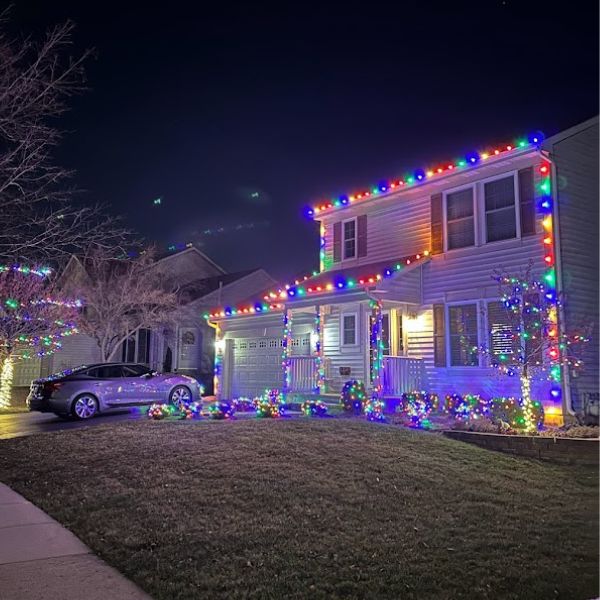
Which Permanent Lighting Brand Is Right For You?
The right permanent lighting brand for your home depends on four factors: home value, ownership timeline, aesthetic priority, and customization preference.
Your Priority | Recommended Brand | Why |
Architectural finish, high-value home | Omni | Best concealment, cleanest daytime appearance |
Maximum customization and display control | JellyFish | Point-by-point LED control, modern app platform |
Proven long-term track record | Trimlight | Longest established brand with strong Midwest history |
Short ownership horizon or rental property | Govee (DIY) | Lowest upfront cost, self-installed, limited lifespan |
HP Installation Process
Every HP permanent lighting installation follows a five-step process designed to protect your property, maximize system performance, and ensure you are fully trained on your new system at handoff.
Step 1: Consultation And Roofline Evaluation
HP begins every project with an on-site consultation that includes a full roofline evaluation, property walk, and system recommendation. We assess soffit depth and material, roofline complexity, electrical panel access, and circuit capacity. This evaluation drives every downstream decision — including which brand and system configuration is correct for your specific home. The consultation is complimentary and includes a written proposal.
Step 2: System Design And Layout Planning
After the consultation, HP’s installation team produces a precise layout plan that maps every track section, circuit run, and connection point across your roofline. This plan is reviewed with the homeowner before installation begins, ensuring full transparency on what is being installed and where. No surprises on installation day.
Step 3: Track And Wiring Installation
HP crews mount the aluminum track system under the soffit using hardware appropriate for your soffit material, whether wood, aluminum, vinyl, or composite. All wiring is routed through the track and terminated at weatherproof junction points. We do not use exposed surface wiring. Every connection point is sealed against moisture and tested under load before the next section is installed.
Step 4: System Configuration And App Setup
After full installation, HP’s technicians configure your system controller, connect it to your home network, and complete full app setup on your devices. We test every node, every zone, and every automation schedule before we close out the job. You will receive a system configuration summary documenting your network settings, controller access, and support contact information.
Step 5: Client Walkthrough And Handoff
HP completes every installation with a client walkthrough that covers app navigation, scheduling, color and pattern selection, seasonal programming, and how to contact HP support if you ever have a question. We do not consider a job complete until the homeowner is fully confident operating the system independently.
Pricing And Investment
Permanent lighting pricing in Chicagoland varies based on home size, roofline complexity, system type, and circuit requirements. HP does not publish a fixed price list because every home is different — a standard Naperville two-story and a Hinsdale estate with a four-peak roofline require fundamentally different scopes of work.
The variables that most significantly affect final investment are:
- Linear footage of roofline coverage
- Soffit material and mounting complexity
- Number of electrical circuits required
- System brand and LED density specification
- Access difficulty (steep pitch, three-story sections, landscaping clearance)
Professional permanent lighting systems require a larger upfront investment than consumer DIY alternatives, but they deliver meaningfully lower total cost of ownership over a 10-year window when you factor in LED lifespan, repair frequency, and resale presentation. HP provides itemized written proposals at no charge so homeowners can make a fully informed investment decision before committing.
Service Area: Chicagoland
HP serves homeowners across five counties in Chicagoland: DuPage, Cook, Will, Kane, and Lake. Our installation crews are based in Naperville and serve the full suburban market from McHenry County in the north to Joliet in the south.
Key suburbs served include:
- DuPage County: Naperville, Wheaton, Elmhurst, Glen Ellyn, Lisle, Downers Grove, Lombard, Westmont
- Cook County: Oak Brook, Hinsdale, Barrington, Elmhurst, La Grange, Western Springs
- Lake County: Lake Forest, Lake Bluff, Libertyville, Vernon Hills, Gurnee
- Will County: Plainfield, Bolingbrook, Lockport, Lemont
- Kane County: St. Charles, Geneva, Batavia, Elgin
Homeowners searching for permanent lighting near me in Naperville, Hinsdale, Barrington, Lake Forest, or Oak Brook are in HP’s primary service territory. Same-week consultations are typically available across all five counties. HP does not sub-contract installations — every crew is an HP-trained team working under HP’s quality and safety standards.
Common Mistakes Chicagoland Homeowners Make When Choosing Permanent Lighting
Choosing A Visible System Because The Price Was Lower
The most common regret HP hears from homeowners who did not use a professional installer is that the system looks cluttered and exposed during the day. A lighting system that draws attention to itself when it is off undermines the architectural appearance of the home and reduces curb appeal. Professional track-mounted systems are designed to disappear when not in use — and that invisible quality is exactly what separates them from clip-on and DIY alternatives.
Hiring An Unqualified Installer For A Professional System
Buying a professional-grade system and hiring an unqualified crew to install it produces the worst possible outcome: a premium product installed incorrectly. Improper track mounting, incorrect circuit sizing, and poor wiring management produce the same failure modes as low-quality systems — within the first season, not the tenth. Always verify installer licensing, liability coverage, and permanent lighting installation experience before signing a contract.
Ignoring Climate Durability In The Specification Decision
Permanent lighting systems sold nationally are not all rated for Midwest climate conditions. Products marketed in warmer climates may use softer track materials, lighter mounting hardware, and sealing standards that perform adequately in Texas or California but fail within two to three Chicagoland winters. Always ask your installer specifically how the system is rated for freeze-thaw cycles and what failure data they have from Midwest installations.
Permanent Lighting Brands FAQ
What Are The Best Permanent Lighting Brands?
The best permanent lighting brands for professional installation are Omni, JellyFish, and Trimlight, each offering durable concealed systems rated for Midwest climate performance. For DIY installation, Govee is the most recognized consumer option, though it does not match professional brands on concealment, LED lifespan, or climate durability.
How Long Do Permanent Lighting Systems Last?
Most professionally installed permanent lighting systems last 10 to 15 years with proper installation and minimal maintenance. LED components in professional systems are rated for 50,000 to 100,000 hours of operation, which exceeds a decade of typical use. Consumer systems with lower-rated LEDs may require partial replacement within five to seven years.
How Much Does Permanent Lighting Cost In Chicagoland?
Pricing varies significantly based on home size, roofline complexity, and system type. HP provides complimentary written proposals for every project, and most Chicagoland homeowners find that the investment range for a professionally installed system represents a meaningful but justified long-term expenditure when compared to recurring seasonal lighting costs over 10 years.
Are Professional Systems Better Than DIY Systems?
Yes. Professional permanent lighting systems deliver better concealment, longer LED lifespan, stronger climate durability, and more reliable electrical engineering than consumer DIY systems available at retail. The performance gap is most visible over a five-to-ten-year ownership window, where professional systems maintain appearance and reliability while consumer systems typically require repair or replacement.
Do Permanent Lighting Systems Work In Illinois Winters?
Yes. Professional-grade systems from Omni, JellyFish, and Trimlight are designed and tested for cold-climate performance, including freeze-thaw cycling, snow load, and high-wind conditions common to the Chicago suburban market. HP specifies systems that have performed reliably in Midwest installations over multiple years and does not install products that lack cold-climate validation.
Can Permanent Systems Stay Up Year-Round?
Yes. Permanent lighting systems are engineered for year-round outdoor installation and do not need to be removed seasonally. This is the core advantage over traditional holiday lighting — the system stays mounted through winter, spring, summer, and fall without homeowner intervention.
Are Systems Customizable For Different Holidays And Events?
Yes. All professional systems HP installs support full RGB color customization, multi-zone programming, and scheduling through a mobile app. Homeowners can configure different lighting profiles for different holidays, adjust brightness levels by zone, and set daily on/off schedules without any manual intervention.
Are Permanent Systems HOA-Friendly?
Yes. Professionally installed permanent lighting systems are typically HOA-compatible because they integrate cleanly into the roofline architecture without visible hardware or exposed wiring. Many HOAs that prohibit traditional temporary holiday lighting approve permanent systems specifically because they maintain a clean architectural appearance year-round.
How Long Does HP Installation Take?
Most HP installations are completed in one to two days depending on home size and roofline complexity. HP schedules projects with defined start and completion timelines and does not leave installations open-ended across multiple weeks.
Do Permanent Lighting Systems Increase Home Value?
Yes. Permanent lighting systems add measurable curb appeal and evening presentation value, both of which factor into buyer perception during home sales. Professionally installed systems with concealed tracks and app-controlled operation present as architectural upgrades rather than accessories, which distinguishes them from traditional seasonal lighting in the eyes of prospective buyers.
Can HP Remove A System If I Sell My Home?
Yes. HP can professionally remove a permanent lighting system if a homeowner chooses to take the system with them at the time of a home sale. Reinstallation on a new property is also available and follows the same consultation and installation process as a new project.
Are Permanent Lighting Systems Energy Efficient?
Yes. LED-based permanent lighting systems operate at very low wattage compared to traditional incandescent holiday lighting. Most homeowners report that running their system nightly throughout the year costs less in electricity than a 10-day incandescent holiday display.
What Happens If One Section Of My System Fails?
Professional systems are installed with segmented circuits, which means a failure in one section does not affect the rest of the system. HP offers service and repair on all systems we install, and most component repairs can be completed in a single service visit without requiring a full system replacement.
Does HP Offer Service And Maintenance Plans?
Yes. HP offers annual maintenance plans that include seasonal system inspection, app re-configuration support, and priority scheduling for any service needs. Maintenance plans are available at the time of installation or at any point during the system's life.
Does HP Install Permanent Lighting Across All Of Chicagoland?
Yes. HP installs permanent lighting systems across DuPage, Cook, Will, Kane, and Lake counties. All major suburban markets including Naperville, Hinsdale, Barrington, Oak Brook, Lake Forest, Wheaton, Elmhurst, and Glen Ellyn are within HP's primary installation territory.
Are Systems Visible During The Day?
Professional systems installed by HP are designed to be architecturally concealed. The aluminum track system mounts under the soffit and hides all wiring and hardware from street level. Most guests and neighbors are unable to identify that a permanent lighting system is installed when viewing the home from the street during daylight hours.
What Homes Benefit Most From Permanent Lighting?
Homes with defined rooflines, established soffits, and architectural features that benefit from evening illumination see the strongest visual return on permanent lighting. Higher-value properties where curb appeal is a meaningful asset tend to show the most significant visual transformation after installation.
Why Choose HP For Permanent Lighting In Chicagoland?
HP brings over 500 completed installations, $2M in liability coverage, Illinois licensing, a zero-accident safety record, and dedicated post-installation client support to every project. We are a permanent lighting specialist — not a general contractor who adds it as an option — and our entire operation is built around delivering professional permanent lighting outcomes for Chicagoland homeowners.